PC gaminghas had a mini-renaissance over the last few years thanks to a steady influx of titles and a renewed player base wanting to play either the biggest titles of this year or simply partake in the mammoth MOBA/FPS free-to-play titles such asCS2,Valorant,League of Legends,orDota 2. Adding to this is a plethora of console games being republished on PC platforms, nearly always with higher graphics presets on offer, allowing for better fidelity and smoother gameplay.
This makes modern PCs (which are considerably closer tomodern consolesthan ever before) possibly the best place to play titles, whether they are indies, remakes, or simply brand-new releases in 2024. It also means that the audience varies frompeople who have been building their PCsfor the last decade to people who are in the market for their first gaming PC and looking to go DIY this round.

Intel Core i5-12600KF 3.7 GHz 10-Core Processor
Intel Core i5-13600KF
Intel is a market leader when it comes to thebest gaming CPUs, and it currently holds a dominant market position when it comes to gaming and productivity-based CPU offerings. With a strong single-core performance that dwarfs its competition and excellent value, Intel’s 12th, 13th, and recently launched 14th-generation CPUs are an interesting mix to behold in an industry that has become increasingly competitive since the start of this decade.
Updated on July 28, 2025 by Sarfraz Khan:With the arrival of newer and faster Raptor Lake Refresh CPUs, we included the best budget chips from the latest lineup to level up your game. These 14th-generation CPUs provide slightly better clock speeds and more cores in some cases to provide a noticeably better gaming performance.

Game Rant’s Picks for the Best Budget Gaming Intel CPUs for 2024
Intel Core i5 14500
The Intel Core i5 14500 CPU is a locked Raptor Lake Refresh CPU that offers higher clocks than its predecessor, the 13500 by pushing both its Performance and Efficient cores higher by 200 MHz.The 14-core, 20-thread CPU offers similar pricing as its predecessor and comes in the same 6-performance and 8-efficiency core configuration. It also works with existing LGA 1700-based 12th and 13th-generation chipset-based motherboards.
Our choice for the best budget Intel CPU for gaming is the Intel Core i5 14500. Intel’s 14th-generation Raptor Refresh Lake improved its CPU lineup either through an increase in clock speed or through increasing the core/thread. The Intel Core i5 14500 is among the ones that received a good 200MHz increase in the Turbo boost, resulting in slightly better performance over its predecessor, the Core i5 13500. Indeed, the improvement is not that serious, but considering that the Core i5 14500 costs the same, it makes it an overall better choice.

Not only is it a powerful 14-core CPU that provides clock speeds up to 5.0GHz, but it also brings integrated graphics onboard, which most budget Core i5s fail to bring to the table. The result is a chip that doesn’t force you tobuy a dedicated GPUif you don’t have serious graphical workloads. For most intensive processes, like rendering, compiling, compressing/decompressing, and encoding, the Core i5 14500 will do the job satisfactorily, offering better multicore performance than any sub-$250 processor is able to achieve.
Intel Core i3-14100F
Intel Core i3-14100F is a refreshed version of the i3 13100F, now with higher clock speeds that go to as much as 4.7 GHz. Based on Intel’s older Alder Lake architecture rebadged as a Raptor Lake Refresh offering, the CPU brings 4 performance cores and a total of 8 threads to get started with any small or medium-scale application. With its capable single-core performance, it holds its own versus most entry-level processors in gaming and productivity alike.
Intel Core i3s have always been at the forefront when it came to delivering ample strength for gaming and basic tasks. The Core i3s have come far concerning their configurations and the i3 14100F is currently the pinnacle of all the i3s that ever existed. It’s surely not a big upgrade over the i3 13100F, but it does boast the highest clock speeds of up to 4.7GHz in Turbo Boost mode. This results in a slight improvement over its predecessor and makes it a wonderful choice for budget gaming PCs as video games generally love high clock speeds.
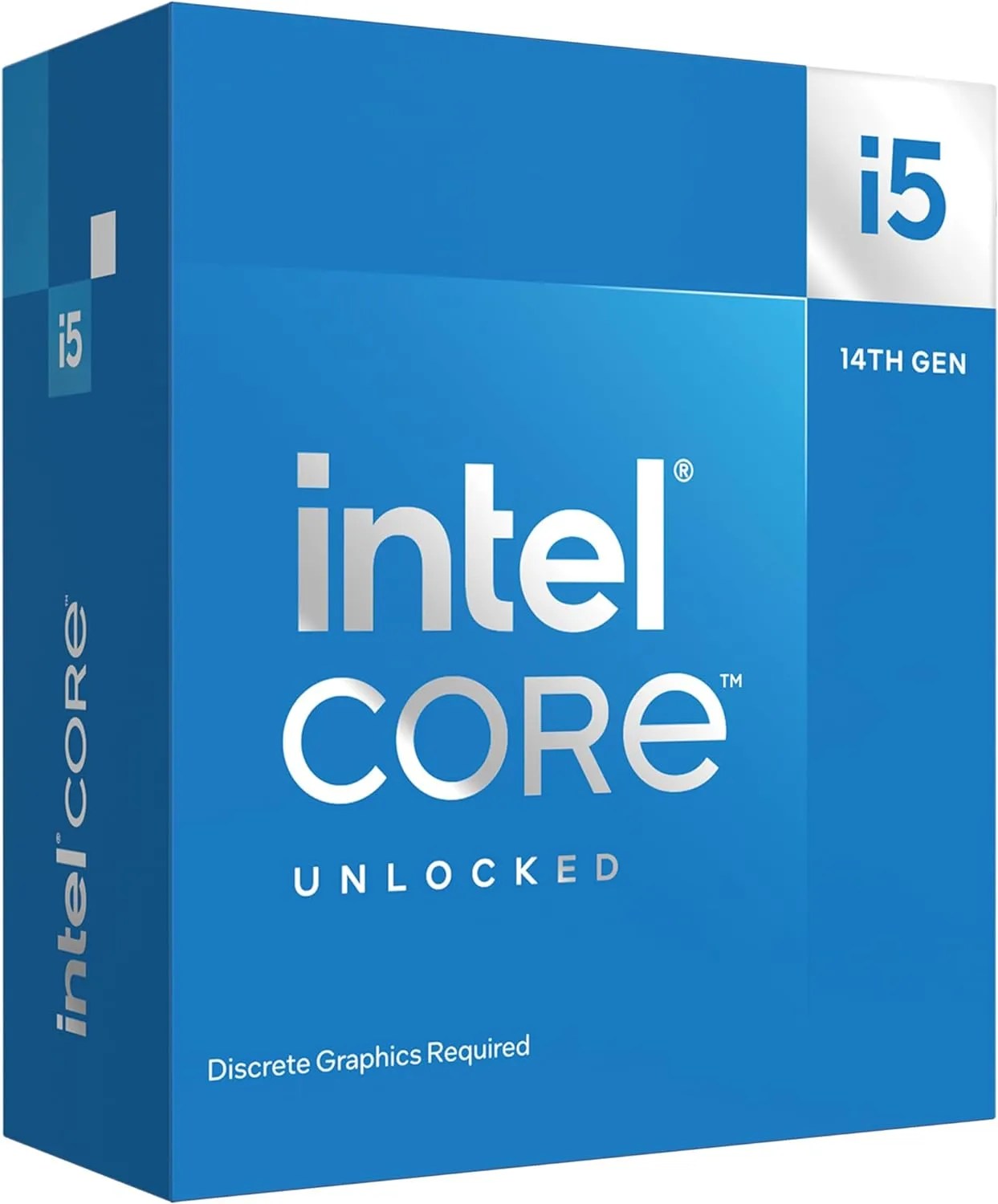
With the Core i3 14100F, you don’t need to buy a dedicated GPU cooling solution as the stock heatsink will be sufficient to cool its 4-core, 8-thread configuration. It’s not overclockable and hence can be used on anybudget H610 or B760 chipset motherboardto cut the cost of the build significantly. From basic tasks like browsing the internet, opening sheets, and some multitasking to some intensive tasks like modern gaming, the Core i3 14100F is ready to deliver a convincing performance on a budget.
Intel Core i5-14400F
Intel Core i5-14400F is a revised edition of the i5 13400F that brings higher clock speeds for the same price. The Raptor Lake Refresh architecture helps it improve in overall performance while retaining its power efficiency. The i5 14400F brings 6 performance and 4 efficient cores, resulting in a total of 16 threads.
While the Core i5 14500 and 14400F belong to the same family, the former brings a noticeably higher core/thread count but at the same time, it is $40-$50 costlier. At that price point, one could argue that it’s better to go withthe Ryzen 5700X3D or Ryzen 7600Xif gaming is the primary purpose, but at the same time, the Core i5 14400F is undefeated in its multithreaded performance at a $200 price point. Thankfully, it retains the six performance cores as in Core i5 14500 and gets four efficient cores to handle the background tasks.
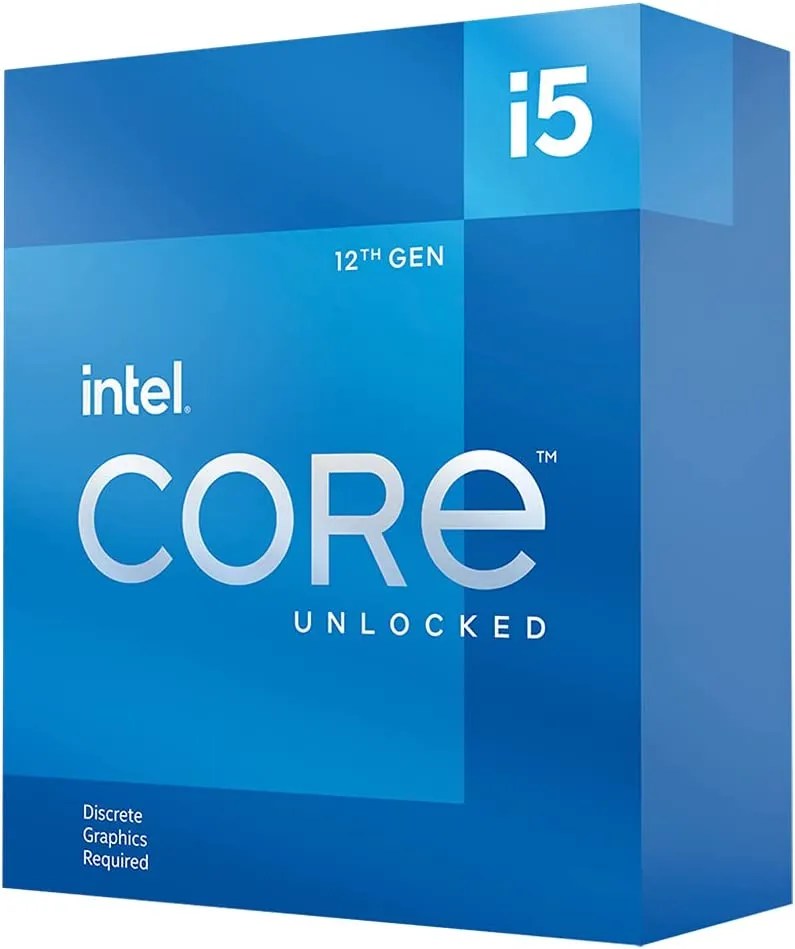
The processor handles gaming and productivity quite well and provides a much more power-efficient operation compared to the unlocked Intel and AMD chips. Unlike other refresh chips, the i5 14400F receives a 200MHz boost in the efficient core frequency and 100MHz in the Turbo mode. It doesn’t do much compared to the i5 13400F, but as both cost the same, the 14400F is a much better choice for the latest Intel 700 platforms if you would want to squeeze out the maximum amount of power without the need to overclock it. Not being overclockable may make it a little unattractive, and if that’s the case, we recommend taking a look at the next CPU.
Intel Core i5 14600KF 14-Core, 20-Thread CPU
Value Unlocked Refresh
The Intel Core i5 14600KF 14-Core, 20-Thread CPU is a powerful mid-range CPU that replaces the last generation Intel Core i5 13600KF with higher clocks on both its performance and efficiency cores.Like all its siblings, it does offer better performance out-of-the-box versus its predecessors but replaces them at the same price points they sold last year. Unlike the Intel Core i5 14600K, this model trades at a small discount thanks to it skipping out on integrated graphics.
The Intel Core i5 14600KF or 14600K areIntel’s mid-range budget-centric gaming CPUsoffering an unlocked 14-core configuration as they aim to replace last year’s 13600K/KF CPUs. The 14600KF works with the same LGA 1700 socket that Intel’s 12th generation Alder Lake and 13th generation Raptor Lake CPUs do and has a similar configuration to yesteryear’s favorite gaming CPU from Intel, the Core i5 13600K.

Much like Intel’s other unlocked CPUs on offer during the last few years, the 14600KF does not come with a stock cooler out of the box making it necessary to factor in the cost ofa decent CPU coolerto avoid throttling the 14600KF, which runs hotter than its predecessor, with some of the weaker options on offer. Unlike both its higher-end siblings, the 14700K/KF and the 14900K/KF, it does not receive benefits from Intel’s APO schedule optimizations in certain titles nor the AI-enhanced XTU tweaking that the latter has, making it possibly the most underwhelming upgrade generation on generation of all 3 unlocked Intel desktop CPU tiers.
This, however, also underlines how well-received the Intel Core i5 13600K and KF CPUs were at launch, making them favorites for both, DIY PC builders and professional assemblers alike. The 14600KF hits the right note in terms of pricing versus its competition and its higher-tier siblings alike, overwhelmingly making it Game Rant’s strongest candidate for the best performance-centric budget Intel CPU for gaming.
The Intel Core i5 14600KF CPU also comes with a freeStar Wars Outlawsgame bundle at the time of writing at participating retailers
Deca-Core Unlocked Power
This 12th-generation Intel CPU has 10 cores and runs at 3.7 GHz base clock and up to 4.9 GHz boost clock speed. Of the 10 cores, there are 6 performance and 4 efficiency cores keeping the TDP fairly low at 125 W.
The Intel Core i5 12600KF is an excellent CPU that holds its own against the competition from both AMD and Intel’s pricier 13th gen alternatives. While being marginally cheaper than the Intel Core i5 13500, it does routinely beat it by harnessing its high clocks and overclocking potential in multiple gaming benchmarks, making it an excellent budget Intel CPU for gaming.
To do so, it must, however, push prices a bit higher as itrequires better, dedicated coolingto be able to handle its heat dissipation. Intel does not ship a stock cooler with this, making it an added expense and bringing it to par, if not higher than Intel’s 13th or 14th-generation offerings. It does have four fewer efficiency cores than its comparable Raptor Lake alternatives, but they do not factor in when it comes to gaming performance in a meaningful way while the 12600KF’s higher clocks and potential boost clocks do factor in favorably.
The 12600KF is an excellent CPU, but it does skip on an iGPU to cut costs. This means that you must be ready to pair a discrete GPU at all times to get a display from what is arguably the most value-centric 12th-gen Intel CPU on the market right now.
The Intel Core i5-13600KF is a budget-friendly yet fairly capable CPU for gaming. It can deliver decent performance in most modern games at even 1440p resolution, depending on the settings and the GPU. It features 14 cores and 20 threads with boost clock speeds of up to 5.1 GHz out of the box. The ‘F’ in the name means there is no iGPU which helps keep the cost down.
One of the best advantages of using the Core i5 13600KF is that you get a high-quality unlocked CPU for a sub-$250, which is somewhat comparable to the $50 more expensive Core i5 14600KF. While the 13600KF brings significantly better specs than the 12600KF, the 14600KF is not that far away from the 13600KF. It’s true that the 14600KF is currently the fastest Core i5s ever made but when it comes to price-to-performance ratio, the 13600KF wins with a slight margin.
With a powerful 14-core, 20-thread configuration, it’s ready to take on any task you throw at it. Whether you want to encode long videos in a couple of minutes or render some complex scenes, the Core i5 13600KF is here to assist you without costing an arm and a leg. With overclocking, you can further squeeze some more performance out of it, but remember it would need agood AIO cooling solutionto maintain stability in the clock speed. All in all, Core i5 13600KF is the perfect middle ground between the 12600KF and 14600KF, offering similar compatibility and working.
Choosing The Right Budget Intel CPU For Gaming
A CPU for gaming has slightly different requirements compared to some of its more mainstream options which see newer, unlocked, faster CPU cores push better gains thanks to higher IPC counts and higher single-core clocks. Users generally in the market for a budget-oriented CPU for their use cases need to consider the following to ensure they get the best value for their money while ensuring decent performance out of the box.
Performance: While Intel no longer offers double-digit IPC count gains generation on generation, it does tend to offer small gains coupled with higher clocks to boot. This means that newer generations with higher base and boost clocks are often more favorable candidates compared to their slightly older (and sometimes pricier) last-generation alternatives.
Price: For budget-centric CPU recommendations, pricing is key.While most CPUs at sub-$200tend to offer excellent performance in a multitude of titles, some games (such asCounter-Strike 2) are more CPU-centric than GPU-centric. This is particularly true for higher-end CPUs that offer excellent single-thread performance, allowing titles likeCounter-Striketo exhibit double-digit performance gains with certain CPU upgrades.
Overclockability: In a world where silicon is already being pushed closer to its limits every iteration, a great deal of performance gains lately come from higher clocks. This means that most gaming-centric ‘unlocked’ CPUs from Intel offer a great degree of overclockability. However, not all CPUs overclock equally well thanks to thermal restrictions, cherry-picked cores (also known as binning), and overall design when it comes to different CPU generations.
Other potential performance gains can also be had by utilizing a mix of software and hardware optimizations such as Intel’s APO (Intel® Application Optimization) which currently sees itself limited to its highest-end Raptor Lake Refresh CPUs. Intel has however recently stated that it will bring APO to last-generation CPUs in similar hybrid Big.LITTLE configurations with the unlocked higher-end 12th and 13th gen CPUs as expected beneficiaries of the gaming-centric tech that has found adoption in titles such asWorld of Warcraft.
Choosing the Right Intel Processor For Gaming In 2024
All in all, Intel has plenty of processors that overlap in many of the categories we listed above. Game Rant’s team has generally tried to focus on units that give the best price and performance ratios while prioritizing gaming performance whenever possible. This means that the core focus has been PC gaming and the CPU picks heavily lean towards stronger single-core performance. This does result in most of the picks on offer generally being unlocked Intel ‘K’ series CPUs that offer higher clocks as a result.
A lot has changed since this guide was originally posted with the Ryzen 7 7800X3D taking the top performance crown and upsetting the apple cart at the high-end gaming segment significantly. Intel’s 14th-generation offerings such as the Core i9 14900K utilize its APO boost in certain titles coupled with AI-based gains from its XTU application to narrow the gap when it comes to gaming while beating AMD’s offering in some titles comprehensively. If users are interested in getting the fastest CPU possible however and the price is not a concern, they might want to considerchecking out both Intel and AMD’s finest gaming CPUsand how they stack against each other.
FAQ
Q: Should gamers get an unlocked or locked Intel CPU?
While Intel’s locked CPUs also work well under normal load, they are designed to generally function within the thermal limits of their bundled cooling solution which is an entry-level cooler by Intel. Unlocked CPUs tend to push these boundaries considerably and require cooling to match their thermal requirements. All in all, it comes down to a matter of paying for more performance when two comparable processors are considered along these lines.
Q: Should buyers learn how to overclock a CPU?
Overclocking used to be a complex affair, but Intel and AMD (the two mainstream CPU manufacturers) have made things simpler over time. CPUs over the last few years are much smarter and can “boost” (Intel) or go into “overdrive” (AMD) to eke out extra performance without manual intervention from the user. There are enthusiast overclocking builds, but they generally are built by experts or enthusiasts trying to push existing CPU limits.
